
Completed
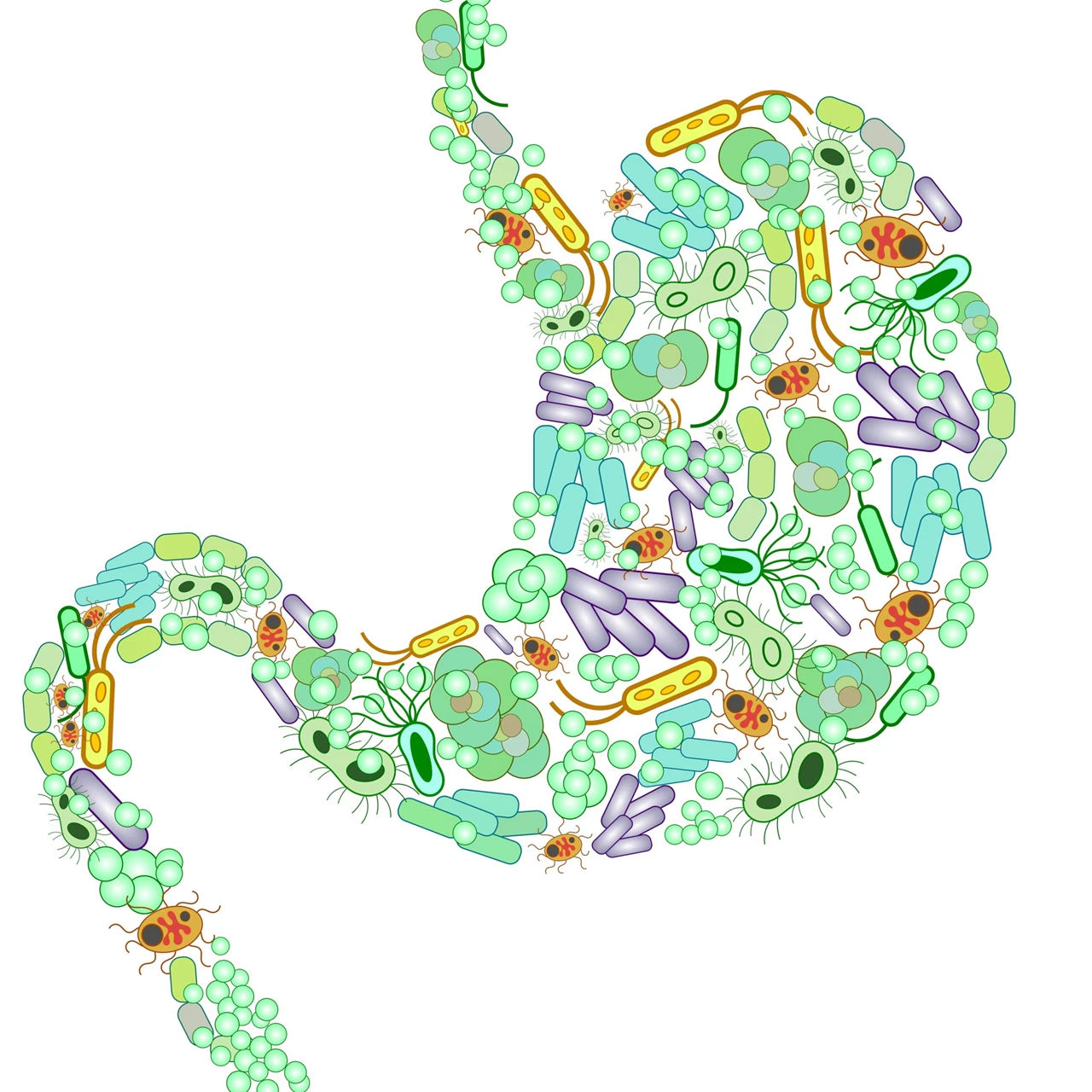
The Gut Microbiome: Influencing infant’s future health infographic
Articles
The Gut Microbiome
5 mins
The mainstay of management remains the complete elimination of cow’s milk (CM), including its derivatives from the diet2. Breast milk also continues to be the gold standard source of nutrition in children with CMA, however, when breast milk is not available, current guidance suggests the use of a hypoallergenic formula as an alternative3.
In 1999 the European Society for Paediatric Allergology and Clinical Immunology [now called the European Academy for Allergy and Clinical Immunology (EAACI)] and the European Society for Paediatric Gastroenterology, Hepatology and Nutrition (ESPGHAN) suggested that products labelled with reduced allergenicity should comply with either of the following guidelines: an in vitro content of < 1% immunoreactive protein of total nitrogen containing substances, or that at least 90% of children with a proven CMA tolerate the feed with a 95% confidence interval3,4.
According to this definition only extensively hydrolysed formula (EHF) or amino acid feeds are suitable for the management of CMA3,5. The only truly non-allergenic formula currently is an amino acid formula; however, this has a significant cost implication for use and has in most guidelines been reserved for the more severe spectrum of CMA1,6,7. The majority of cow’s milk allergic conditions are therefore managed with EHFs. Previously the choices of EHFs were limited to one or two EHFs based on either casein (EHF-C) or whey (EHF-W).
However, in recent years several new products have been launched, with an increase in claims of improved allergenicity based on peptide length or Dalton size. This has led to the re-emergence of discussion around the meaning of these parameters in cow’s milk allergic infants and whether this needs to be taken into account with the choice of formula.

In order to establish the allergenicity of EHFs, it is important to understand the protein composition of cow’s milk and also the process of producing a hydrolysed formula (Table 1).
Cow’s milk contains both casein and whey proteins, with each of these fractions containing several allergenic proteins. These proteins contain epitopes that are divided into two categories which are classified according to their specific amino acid sequence; these can either be conformational or linear/sequential epitopes.
For an allergic reaction to occur, circulating antibodies recognise specific conformational and/or linear epitopes on the antigen surface, which in turn leads to a cascade of immune reactions resulting in the symptoms associated with an allergic reaction to CM.
In order therefore to produce a hydrolysed formula suitable for the management of CMA, casein or whey proteins need to be hydrolysed (breaking of peptide bonds) in such a way that the recognition of these epitopes does not occur.
Protein in cow's milk and Dalton size of each protein1,8
| Whey proteins | Protein | Dalton Size (kDA) |
|---|---|---|
| α-lactalbumin | 14.2 | |
| immunoglobulins | 160.0 | |
| lactoferrin (traces) | 800.0 | |
| ß-lactoglobulin | 18.2 | |
| bovine serum albumin | 67.0 | |
| Casein proteins | α-s1-casein | 23.6 |
| α-s2-casein | 25.2 | |
| ß-casein | 24.0 | |
| γ1-casein | 20.6 | |
| γ2-casein | 11.8 | |
| γ3-casein | 11.6 | |
| Κ-casein | 19.0 |
Hydrolysed formulas are processed using four main technologies to reduce the molecular weight of CM9:
Both extensively hydrolysed casein and whey formulas exist and in the majority of modern hydrolysates a combination of the above methods are used.
Allergenic properties of EHF can be characterised by biochemical techniques, such as the spectrum of the peptide sizes/molecular weight or the ratio of α-amino nitrogen to total nitrogen. The allergenic properties may be tested in vitro by various immunologic methods including Immunoglobulin E (IgE)-binding tests such as radioallergosorbent test (RAST), RAST-inhibition test, and enzyme-linked immunosorbent assay (ELISA), and in vivo by the skin prick test (SPT) and the gold standard method, the oral challenge tests14,15.
The molecular weight of proteins and peptides are expressed in Daltons (Da) or kilo Daltons (kDa) and the extent of hydrolysis of feeds are therefore specified in this unit. Guidelines have often defined EHFs as formulas “where most of the nitrogen is in the form of free amino acids and peptides < 1.5 kDa”4. The recent British Society for Allergy and Clinical Immunology guidelines have also stated that feeds where the “greatest percentage of peptides under 1 kDa” may be preferable16. The hypoallergenicity of amino acids are undisputed, however the exact definition of “most or majority of peptides < 1.5kDa or 1 kDa” remains elusive, as the in vitro threshold for eliciting an allergic reaction has not been established.
The exact definition of “most or majority of peptides < 1.5kDa or 1 kDa” remains elusive, as the in vitro threshold for eliciting an allergic reaction has not been established.
In order to explore the origin of this arbitrary Dalton size cut-off, one has to study research that is now > 20 years old. In 1993 Siemensma et al.10 studied the importance of peptide lengths of commercially available EHFs using sodium dodecyl sulfate polyacrylamide gel electrophoresis (SDS-PAGE), which was at that time a relatively new method, and identified three generations of EHF:
Significant amounts of peptides of molecular weights > 1.5 kDa were not detected in any of the above feeds, however, in some there was still a residue of < 1% peptides with a molecular weight of ≥ 3 kDa (peptide length of around 27 amino acids), which is regarded as the upper limit for EHFs14. Since the publication of this study in 1993, EHFs have for some reason been judged by this arbitrary cut-off of having the majority of peptides “below 1.5 kDa”. However, this in vitro cut-off does not predict the allergenicity of an EHF in clinical practice.
Since the publication of this study in 1993, EHFs have for some reason been judged by this arbitrary cut-off of having the majority of peptides “below 1.5 kDa”. However, this in vitro cut-off does not predict the allergenicity of an EHF in clinical practice.
It is known that in IgE-mediated CMA around 10% of children continue to react to an EHF and up to 30% in non-IgE-mediated CMA2,18. However, this may not only be related to peptide size, but also residual intact proteins (i.e. β-lactoglobulin), and polymers or aggregates formed during the production or reconstitution14. More recent in vitro studies have therefore focused on protein components that may elicit an allergic reaction (the ability of protein components to bind pre-existing antibodies), using a combination of SDS-PAGE, native PAGE, immunoblotting, dot-immunobinding and ELISA. A study by Rosendal and Barkholt combined these methods and ranked the allergenic potential of six different EHFs as follows: EHF-casein (Nutramigen, Pregestimil), followed by EHF-whey (Alfare, Nutrilon (Aptamil) Pepti and Pepti Plus (stage 2), Pepti Junior, Profylac and Pregomen)14. Similar results were found in a Swedish study, with the EHF based on casein having ntthe least allergenic potential19. However, as with the Dalton size, none of the above in vitro studies can predict a clinical reaction in a child with a proven CMA.
As with the Dalton size, none of the above in vitro studies can predict a clinical reaction in a child with a proven CMA.
Several studies were performed in the nineties and one in 2001 to translate in vitro hypoallergenicity into actual reactivity in children with confirmed CMA. These found conflicting results, summarised in Table 2 and 3.
Specific IgE and positive SPT according to several studies using a variety of different patients (adjusted from Halken S and Host A)20,21
| Specific IgE against EHF | SPT ≥3mm against EHF | |||||||
|---|---|---|---|---|---|---|---|---|
| EHF | Oldeaeus et al.19 | Halken et al.22 | Ragno et al.23 | Oldeaeus et al.19 | Sampson et al.24 | Halken et al.22 | Ragno et al.23 | Giampietro et al.20 |
| Nutramigen (EHF-casein) | 6/45 | - | 1/45 | 11/25 | - | - | - | - |
| Alimentum (EHF-casein) | 3/45 | - | 3/20 | 3/20 | - | - | - | - |
Profylac (EHF-whey)
| 6/45 | 3/66 | 4/20 | 5/34 | - | 3/66 | 3/20 | 4/26 |
| Nutrilon (Aptamil) Pepti (EHF-whey) | - | - | - | - | - | - | - | 6/31 |
Summary of positive challenges to a variety of EHFs (adjusted from Halken S and Host A)20,21
| Outcome of CMP challenge | ||||||
|---|---|---|---|---|---|---|
| EHF | Oldeaeus et al.19 | Sampson et al.24 | Ragnoet al.23 | Halken et al.22 | Hill et al.25 | Giampietro et al.20 |
| Nutramigen (EHF-casein) | 0/7 | 0/23 | 0/8 | 0/16 | 4/5 | – |
| Pregestimil (EHF-casein) | - | - | 0/8 | - | 0/1 | - |
| Alimentum (EHF-casein) | 1/11 | 0/23 | - | - | - | - |
| Profylac (EHF-whey) | - | - | - | 0/66 | - | 2/26 |
| Alfare (EHF-whey) | - | - | 2/8 | - | 2/4 | - |
| ExpHA (EHF-whey) | - | - | 4/8 | - | - | - |
| Pregomin (EHF-whey) | - | - | 1/8 | - | - | - |
| Nutrilon (Aptamil) Pepti (EHF-whey) | - | - | - | - | - | 1/31 |
Positive SPT and specific IgE results in both EHF-C and EHF-W have been documented with a variety of different peptide lengths. Similarly, challenge procedures to these formulas also yielded positive results to a small number of children with both casein and whey hydrolysates, all with the majority of peptides < 1.5 kDa, however, with variation in the percentage of peptides < 1 kDa. In fact, anaphylaxis to a variety of EHFs has been reported26-28. Host et al.29 explored the importance of β-lactoglobulin in mothers consuming cow’s milk versus EHFs. This group found that β-lactoglobulin can be detected in the breast milk of 95% of lactating women at a level of 0.9–150 lg/l (median 4.2 lg/l). Similarly low amounts (0.84–14.5 lg/l) of residual β-lactoglobulin have been found in EHFs. In the past, it was thought that β-lactoglobulin, a whey protein, was the most important protein related to CMA; however, it has since been shown that other proteins, such as the different caseins, are also involved in the aetiology of this allergy1. There is a paucity of data on the residues of other proteins in EHFs (i.e. α-casein or γ-casein), but one can hypothesise that reactions to EHFs could also occur as a result of protein other than β-lactoglobulin.
Based on current data, in vitro assessment of peptide size is useful for quality control and the labelling of EHFs, but it is not a reliable marker to predict reactivity in children with a CMA. All products marketed for the management of CMA should therefore have their efficacy tested in a clinical setting, indicating tolerance in 90% of children with proven CMA.
| Term | Definition |
|---|---|
| Dalton | This is the standard unit that is used for indicating mass on an atomic or molecular scale and is used to provide an indication of the peptide length in EHFs |
| Epitopes | A molecular region on the surface of an antigen capable of eliciting an immune response |
| Conformational epitopes | Epitope with a specific three-dimensional shape |
| Linear/sequential epitopes | Epitope with a linear sequence of amino acids |
| Radio-allergosorbent test | This test is a radioimmunoassay to detect specific IgE antibodies to suspected or known allergens for the purpose of guiding a diagnosis |
| Enzyme-linked immunosorbent assay | This is a biochemical test that uses antibodies and an enzyme-mediated colour change to detect an antigen |
| Mol % | Percentage of moles. 1 kDa has a molecular weight of 1 kilogram per mole of protein |
| Chromatography | Chromatography is a process in which a chemical mixture carried by a liquid or gas is separated into components as a result of differential distribution of the solutes as they flow around or over a stationary liquid or solid phase |
| Electrophoresis | Electrophoresis is the motion of dispersed particles relative to a fluid under the influence of a spatially uniform electric field |
| Immunoblotting | Analytical technique used to detect specific proteins in a sample of tissue homogenate or extract (i.e. Western blot). It uses gel electrophoresis |
Access clinical information and professional resources
This page is intended for healthcare professionals. If you are a patient or carer, you will be redirected to our patient and carer homepage.
