Combination feeding

Breastmilk provides a baby with perfectly balanced nutrition, which is why both the Department of Health and Social Care (DHSC) and the World Health Organisation (WHO) recommend exclusive breastfeeding for the first six months of a baby’s life and continued breastfeeding alongside the introduction of appropriate solid foods beyond six months1,2.


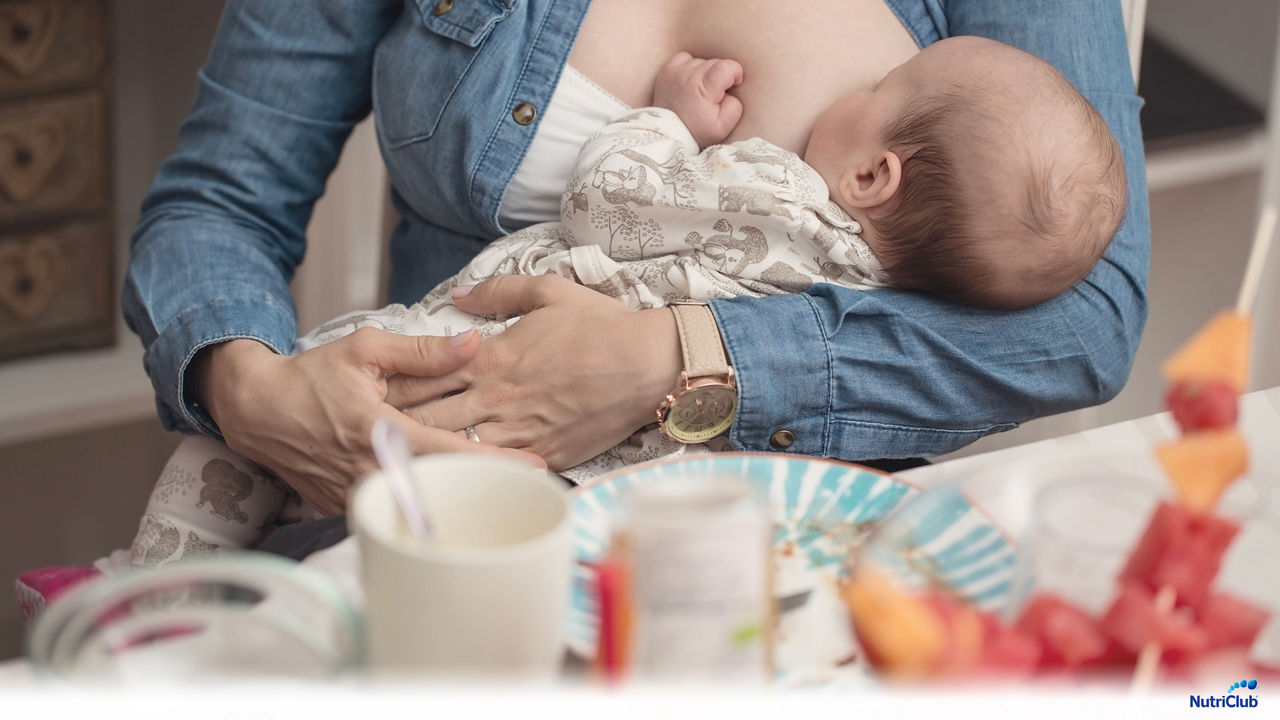
Whilst some mums choose not to breastfeed and some cannot, there are some mums who choose to combination feed. This includes combining breast and bottle feeding, the latter of which can include feeding expressed breastmilk or formula milk. The NHS states that whilst it is possible to combination feed, it’s best to wait until breastfeeding is established3. If a mum is considering combination feeding, it’s important that they discuss this feeding option with a healthcare professional such as a midwife or health visitor. 

What is combination feeding?

The term combination feeding can be confusing as it can be interpreted in a variety of different ways. 

How is it possible to support parents choosing to combination feed?

It’s important that parents choosing to combination feed their baby have the right support from healthcare professionals to ensure that breastfeeding can continue alongside the introduction of expressed breastmilk or formula milk. 

The Beat is available on all major podcast platforms, click here to listen to The Beat on your preferred platform instead.

IMPORTANT NOTICE: 

Breastfeeding is best for babies. Infant formula is suitable from birth when babies are not breastfed. Follow-on milk is only for babies over 6 months, as part of a mixed diet and should not be used as a breastmilk substitute before 6 months. We advise that all formula milks including the decision to start weaning should be made on the advice of a doctor, midwife, health visitor, public health nurse, dietitian, pharmacist or other professional responsible for maternal and child care. Foods for special medical purposes should only be used under medical supervision. May be suitable for use as the sole source of nutrition for infants from birth, and/or as part of a balanced diet from 6–12 months. Refer to label for details.

  1. The World Health Organization’s infant feeding recommendation [online]. Available at: https://www.who.int/health-topics/breastfeeding#tab=tab_2 [Accessed March 2022].
  2. Department of Health. Infant Feeding Recommendation [online]. 2003. Available at: https://webarchive.nationalarchives.gov.uk/20120503221049/http://www.dh.gov.uk/en/Publicationsandstatistics/Publications/PublicationsPolicyAndGuidance/DH_4097197 [Accessed March 2022]. 
  3. NHS. How to combine breast and bottle feeding [online]. 2019. Available at: https://www.nhs.uk/conditions/baby/breastfeeding-and-bottle-feeding/bottle-feeding/combine-breast-and-bottle/ [Accessed March 2022]. 

You may also be interested in

Do you have a question?

Contact our team of experts for guidance on the use and composition of our product range, for support with queries regarding your Nutricia account and sampling service or to get in touch with your local Nutricia representative. We are available Monday to Thursday 9am-5pm and Friday 9am-4pm (except Bank Holidays)

Ask a question

Send us a message

Express a complaint

Send us a message

Phone UK

Call us on 01225 751 098

Phone NI

Call us on 0800 783 4379

Phone ROI

Call us on 1800 923 404

This page is for Healthcare Professionals

Please tell us who you are so we can show you the most relevant information

Healthcare Professional

Access clinical information and professional resources

Patient or Carer

This page is intended for healthcare professionals. If you are a patient or carer, you will be redirected to our patient and carer homepage.

x